
Camunda 7 to Operaton migration
Move your process applications to Operaton with migration engineering from Haulmont Tech.
- Understand the scope before you commit
- Adapt applications and integrations
- Plan a controlled move to production
Choose the help you need
Select the level of migration engineering that fits your team — from an initial assessment to full implementation or expert guidance.
Migration services
Migration assessment
- Review your stack and dependencies
- Get a migration plan and effort estimate
Migration delivery
- Adapt, test and prepare for rollout
- Implementation by Haulmont’s delivery team
Guided migration
- Your team leads; we advise and help resolve blockers
- Expert consulting or a dedicated migration specialist
Not ready to migrate?
- Explore maintenance for your current Camunda 7 configuration
- Introduce Flowset Control where compatibility is validated
Your route to Operaton
- Assess. Review versions, integrations and operational constraints.
- Validate. Test representative processes in a scoped pilot.
- Migrate. Implement changes, test and rehearse the transition.
- Launch. Complete production rollout and hand over operational guidance.
Migrating from Camunda versions before 7.18
For Camunda versions before 7.18, the main migration challenge is that BPM applications may rely on deprecated functionality. Rewriting this functionality using supported APIs and approaches is the largest source of uncertainty in migration scope and effort.
- Java and framework dependencies
- Custom plugins and external-task workers
- Running processes, history and recovery
Enterprise support after migration
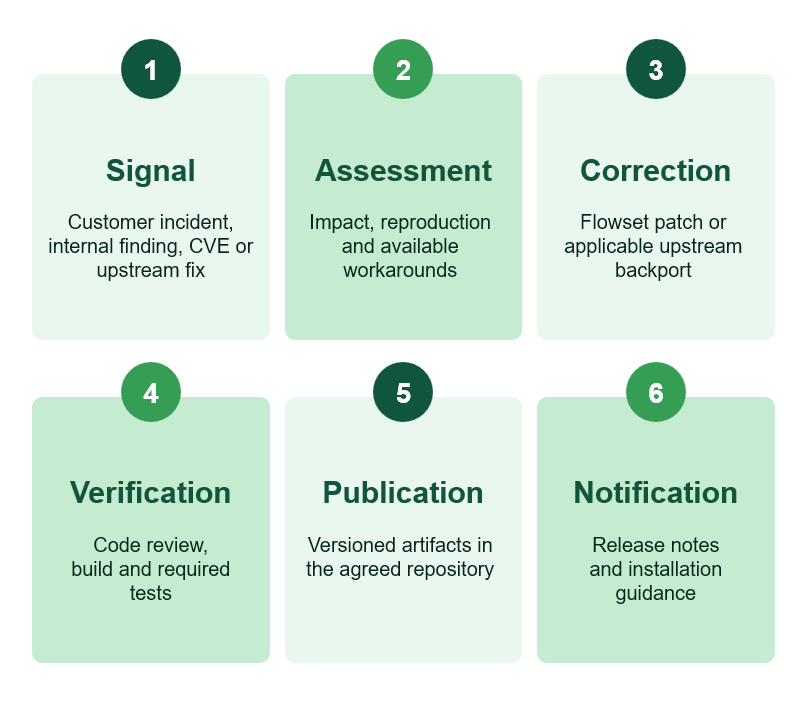
Once you run Operaton, add Operaton Enterprise Support as a separate subscription.
- A dedicated engine branch for your organisation
- Customer-specific builds with versioned releases and release notes
- Security fixes and stability maintenance
- Incident response and technical escalation under your agreed SLA
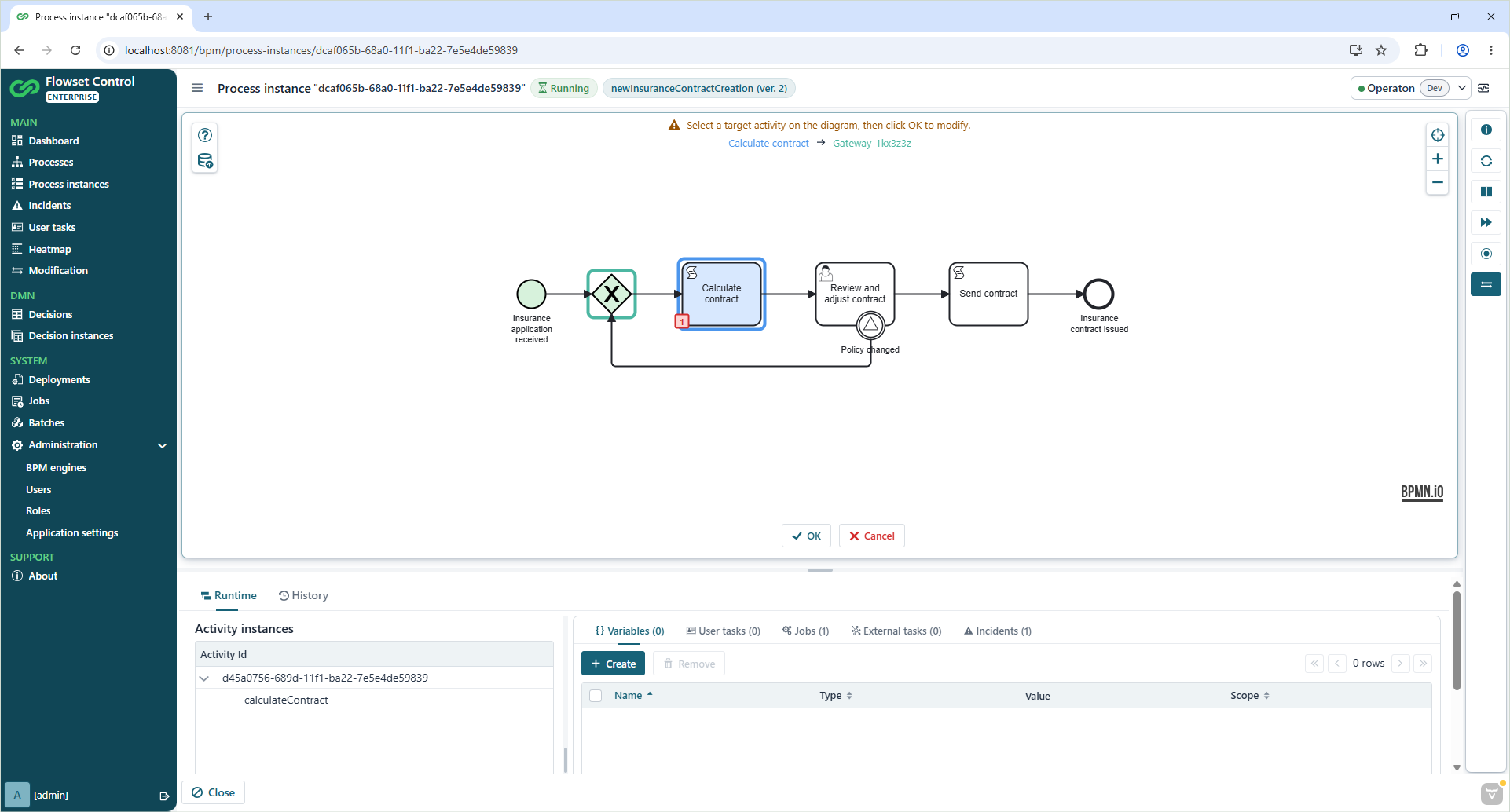
- Flowset Control Enterprise included for monitoring, administration and key indicators
Delivered by Haulmont Tech
- Enterprise software engineering behind Flowset
- Wider delivery experience with Addison Lee, The Keyholding Company and CDER Group

Frequently asked questions
How long does migration take?
We estimate after reviewing your architecture, integrations and test coverage. A pilot can resolve key uncertainties.
What happens to running processes and history?
We agree and test their treatment before production transition, based on your source and target environments.
Can our team lead the migration?
Yes. Your engineers can lead implementation, with consulting, technical reviews or a dedicated migration specialist from our team.
Do we have to buy support with migration?
No. Migration and Operaton Enterprise Support are separate services. You can add support for your target deployment when needed.
Can you help with Camunda 8?
We can discuss a separate replatforming assessment; its scope differs from a Camunda 7 migration.